ROCK BOTTOM HAS A BASEMENT: JESSIE TYLRE WILLIAMS ON ADDICTION, TRAUMA & SURVIVING HELL
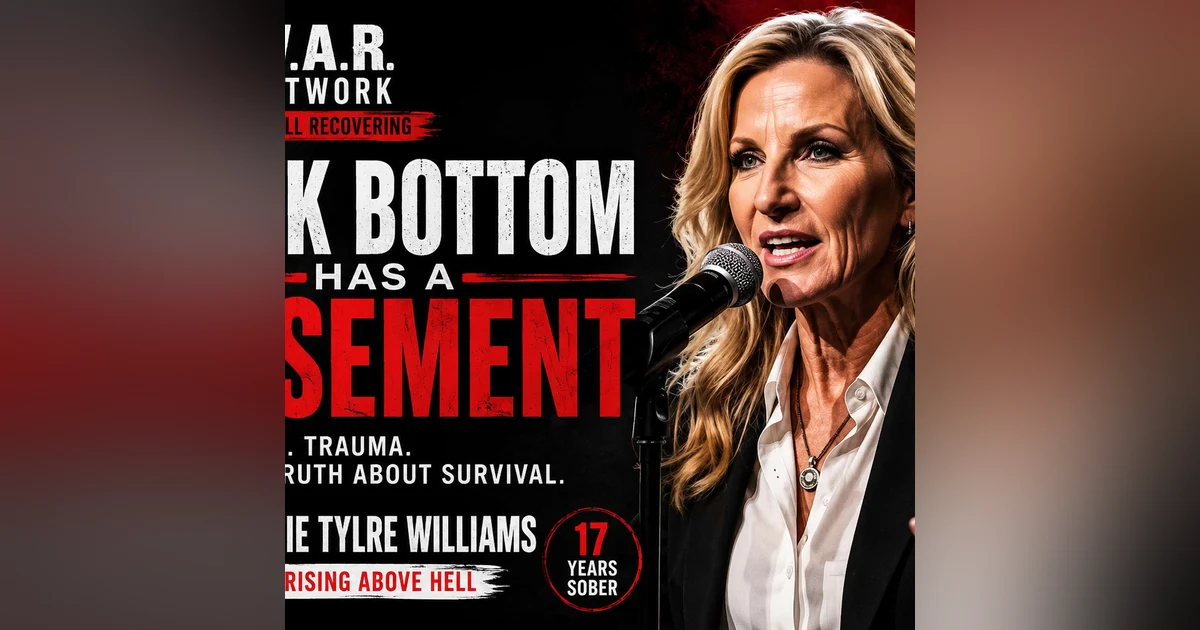

Join W.A.R. Founding Members Rock bottom isn’t always the bottom. Sometimes there’s a basement. On this episode of W.A.R. Network, Stryker sits down with Jessie Tylre Williams for a raw conversation about addiction, childhood trauma, abusive relationships, PTSD, sobriety, survival, and what happens when the substances disappear but the pain is still there. Jessie survived more than 25 years of addiction, childhood sexual abuse, violent relationships, and two brushes with death before rebui...
Rock bottom isn’t always the bottom.
Sometimes there’s a basement.
On this episode of W.A.R. Network, Stryker sits down with Jessie Tylre Williams for a raw conversation about addiction, childhood trauma, abusive relationships, PTSD, sobriety, survival, and what happens when the substances disappear but the pain is still there.
Jessie survived more than 25 years of addiction, childhood sexual abuse, violent relationships, and two brushes with death before rebuilding her life.
Now 17 years sober, she has transformed those experiences into purpose.
Jessie is the author of Rising Above Hell and has spent years advocating for veterans and first responders living with PTSD across Canada. At 50, she also made another radical decision: starting over and building a new life in Mexico.
But this conversation isn’t about creating a perfect recovery story.
It’s about what addiction was actually trying to numb.
What childhood trauma can carry into adulthood.
Why getting sober doesn’t automatically end the war.
What happens when survival mode becomes your identity.
And how someone rebuilds after believing they’ve gone too far to ever come back.
Jessie and Stryker also get personal about PTSD, shame, identity, writing Rising Above Hell, the emotional reality of long-term recovery, and what she would say to the person sitting alone tonight who believes they are beyond saving.
No polished recovery clichés.
No pretending healing is easy.
Just two people talking about what it means to survive hell and still find a reason to keep going.
Because rock bottom may have a basement...
but it doesn’t have to become your grave.
It’s W.A.R. Each One Reach One. We’re All Recovering!
SPEAKER_01
What's going on everybody? Welcome home. Welcome to war. We're all recovering. Today's conversation is raw, y'all. Not polished, not filtered. Not one of those fake recovery stories tied up with the motivational quote at the end. This is survival, real survival. Today I'm joined by Jesse Williams. Jesse Tyler Williams. You got it, brother. A woman who survived over 25 years of addiction, childhood sexual abuse, violent relationships, and what she calls the basement below rock bottom. Death took a shot at her twice, missed both times. She now has a 17-year sobriety, built a new life from scratch in Mexico at 50 years old, advocated for veterans and first responders with PTSD across Canada, and wrote the brutally honest memoir, Rising Above Hell. And honestly, Jesse, what stood out to me immediately is you don't sound like somebody's trying to impress people. You sound like somebody who fought for her life. So Jesse, welcome to war. It's an honor to have it.
SPEAKER_02
Thank you so much for having me here today. It's an absolute honor. And uh yeah, I'm uh what you see is what you get. And I don't really know how to put sugar and fluff on my conversation. So I had enough of that my entire life. So why do it anymore?
SPEAKER_01
Right, right. And you won't get it here. Trust me, you won't get it here. I love it already. Yes, ma'am. Jesse, I want to start with the line that hit me immediately. Rock bottom has a basement. I love that because I was telling people, you know, when I was at my lowest, I said I was below rock bottom, you know. So I was underneath that. Like I couldn't explain it. So so rock bottom has a basement, like it stood out to me immediately. You know, that's one of the rawest things I've heard because most people think rock bottom is the end, you know. But just saying, no, it can even get darker, you know? So what does that mean to you personally?
SPEAKER_02
Well, Straker, I mean, you've been there, so you know that when you're in the trenches and you're you're feeling like you're at the worst possible place in your life, then all of a sudden some other shit goes down and all of a sudden you found the basement and you're you're like, oh my God, like it is worse, it does get worse. And it's it's something, you know, you said it yourself. You can't describe it, you can't explain that stuff to people. And unless they've been there, and and for all the listeners out there as well, I mean, they're gonna resonate with that because they know, and they know that you know, rock bottom is rock bottom, you know, but then all of a sudden you get sucked below that and you drop. And and sometimes that drop is is unreachable for anybody else to go that low. So that basement, it's it's like a cellar, and it and it's brutal to get out of that. And it's you know, literally rising above hell, you know.
SPEAKER_01
My God, stop it. Stop it, because that's what I described it as. Yes, yes, I described it as the only way to describe it is hell. You know, that was my hell, you know. So when you people say heaven or hell, that's hell, you know, like hell is hell on earth, you know. So that was my hell. So I, oh my god, that hit me right here. That hit me right here. You is that absolutely correct. Sorry, I didn't mean to cut you off.
SPEAKER_02
No, not at all. And and these are the conversations we need to have, striker. These are the the this is the part of the stuff that's getting missed, you know. We go from uh the stories of this person that's just completely immersed in addiction to all of a sudden here's Jesse's teen years of sobriety. Nobody talks about that stuff in the middle, the shit that has to keep you alive, the shit that keeps you away from getting back into it and staying clean or sober or whatever term you want to use, it's all that messy, ugly shit that's in the middle that that that you have to work on in every one of those things. And even after 17 years, I never get too cocky and say, Oh, I'm good now. Because you know what stuff happens every single day. And we have to teach people that when this stuff comes up, when the worst day of your life is happening, that you know how to navigate through that and you know how to deal with it. We need to give people the tools to not only survive addiction, but to live with the con with just life. And when stuff happens, what do we do with that? We're so used to succumbing to our demons that we're like, hey, you know what? This is a great excuse for me to use right now. You know, everybody would understand because this just happened. No, it's it doesn't work like that. If you want to stay, you know, and and I mean, it's the healing that has to arise. When I say rising above hell, it's exactly that. I mean clawing your way out of that mess, you know. That doesn't even talk about the the part where you're actually getting it clean, the withdrawals, the detoxing.
SPEAKER_01
My goodness. If it's like, oh good God. My goodness. Yes. Um I'm two years and two months today. Well, yeah, yeah, it is. But Jesse, I'll tell you that when you talk about withdrawals and and like that was the worst feeling I had in my it's like it took me over a year to get over those symptoms. Like I was having, like, even when I detoxed and went into, you know, the treatment programs and everything, I always felt like I had to, you know, I was always sick. I always had to vomit. And now, you know, I couldn't get that sensation. It's the worst feeling, you know. I can't even describe it. It's just like I hope nobody has to live through that. That's it. You know, you know, and it's just like I never want to go back to that again. It feels so good being sober. It feels so good, you know, and they romanticize recovery and and alcohol and everything all over online on the internet, and you know, it's just on T.
SPEAKER_02
Oh, don't you love your life now? My God, those people don't understand the process. And that's why I write about it in my book. And I write about like if you're looking for a clinical version of addiction, recovery, trauma, and all these things, put the book down and run as fast away from it as you can because I don't talk about it from that. I'm not a therapist, not a psychologist, or I have no formal training. All I knew was I can talk from real life experience and what I had to do to survive because I tried all the rehabs. I tried the therapist. Half the therapist would look at me and I've had two therapists actually tell me I don't even know what to do with you. Like, well, thanks. Well, it isn't that reassuring. I guess I gotta figure it out myself too, right? So, and that's what they they glorify some aspects of it, and they don't they don't get in the trenches with you. Like you're talking about the the the withdrawals. And I just want to say for any listeners out there that are in active recovery right now or early in their sobriety, please keep yourself safe. I talk about a lot of things that can be triggering to people. So I just want to make sure that anybody that is listening that you are safe and that you're with somebody that you can lean on if the conversation gets too heavy for you.
SPEAKER_01
Right, right. I appreciate that.
SPEAKER_02
Yeah.
SPEAKER_01
I appreciate that.
SPEAKER_02
So, like you're saying about the the withdrawals, and yeah, and and the only way I know how to describe that part of it is is like if you can imagine your skin being turned inside out and and then that that itch that you can never scratch. Can't keep anything down, watering you try to eat, you can. Right. And it's just like literally you're crawling and clawing your way out of freaking hell. Right, right. Brutal. And I keep that in my brain. Anytime I get too cocky or I have ideas because I'm human, and I'll tell you, there's some days on things that have happened where I'm like, man, it would just be so easy right now to go get high. And then I am never gonna go through that again. And it took me a long time, like it took me years to get over that. I mean, it doesn't come to me every once in a while, and like, oh, you know what, that was a lot of fun doing this. And then I'm like, okay, the rest of it was not even remotely fun, so forget it, get that idea. There are fewer and far between now, but it took probably before that real pulse, it probably took me about four to five years to get rid of that completely. But in that four or five years, I was doing a tremendous amount of work, and that's how I created this book is I mean, I've been writing even active in addiction. I was writing all the time. And the reason I put the workbook in there is I didn't want to just talk about the different stuff that happened in my life. I wanted to give people a place where they could open up a book, read about some shitty things that can happen to a person. And then at the end of that chapter, there's a place where they can apply their own life and they can do their own work on themselves. Because that's the only way to real healing and to recovery is doing that really ugly, shitty, messy work and going deep. And that part really, really sucked for me. I was so angry, striker, just, you know, constant thoughts had like just throat punching people with everything I had and and like the resentment and all these feelings that weren't me because that's not even who I am. I love to be loved. I love loving, you know? And so it was so difficult for me to have to live with this mask that I or masks, I should say, that I constantly had to wear throughout my life. And so as I peeled each one of those masks off, it was literally like, you know, if you ever had uh road rash from a bike accident or anything, my gosh, literally like that, you know, and it's like it's like pulling that layer of skin off and it's it hurts and it sucks because you have to come to terms with a lot of stuff. And especially when when the abuse, whether it's sexual, physical, mental, or whatever that abuse is, when that comes from the people that you love and trust the most in your world, and you have no safety net anymore, that's when the story gets real. It's because I know for me, I still love my mother deeply. I don't really have a relationship with her per se anymore, but I don't like who she is at all. And she still won't even admit to any of the stuff happening. And so that is something I've come to terms with and I've told her straight out, you know, I forgive you for this. I don't like the fact that you still don't believe me. And because just before my book was released, I told her, I said, there's some stuff in here about your brother that you're probably not gonna like, but it's real. And I need to ask you, do you believe me now? And she's like, Oh, well, I just really have a hard time believing that my brother would do something like that. So there's still that that, and I don't know. And I try to be, I've come to a place in my life, Striker, where there must have been, she's never shared it with me. And I I've tried to get her to open up and come from a pure place of love with her, that did something happen to you when you were growing up that could provoke this kind of behavior towards me that could make you so closed-minded that if you if you admit there was something wrong, that it would somehow affect your life. And the other thing is if she admits to it and does finally say, Yeah, I believe you, then she has to deal with her own stuff of not being there for me as a child and protecting me. And so I think that might have a lot to do with it as well.
SPEAKER_01
I think you hit that on the head right there, yeah.
SPEAKER_02
I think I don't think that she can actually deal with what that would do to her coming from a mother's standpoint and the guilt and shame that she's probably carrying with her. So I don't hate her for any of that. It's hurtful that she still doesn't believe me. But I've come to a place where I'm really trying hard to understand, and I know I don't, and I never will fully understand it, but I have learned to accept it for what it is and to try and understand that you can never ever make something right until you believe that something was wrong.
SPEAKER_01
Maybe she's in denial, you know, she just don't want to believe it.
SPEAKER_02
Yeah, absolutely. It's it's her brother, right? Right. But again, you know, your child or your brother, and it it's not the first person that's accused him of it. That's the other thing. So she still won't believe it from anybody. So like I said, I I I think there's some real I just don't think that she I mean, she's 80 now, right? So I I want her when the day comes that she finds her peace. I hope that she can really find it before she passes on, you know, that she can say, Yeah, you know what? And I've said to her, you know what? Were you the perfect mother? Absolutely not. Was I the perfect mother? Hell no. But you know what? Now we know better. Now we can do better. We can break that generational sin. We can break that freaking barrier to all these walls that have surrounded all of us for so many years, generations, okay? And so there has to come a time when somebody has to stand tall and tape the bullets. And I'm I'm okay being that person because it's setting a lot of people free. A lot of people have already come to me that this has happened to from the same man. So is he still around? This is one incident in my book that I'm talking about particularly. What's that? What was your question? Is he still around? Is he still alive, her brother? Yes, he is. Yeah, there's a that whole story then too, right? So yeah. I never see him, I never want to see him. I like I don't go to any family functions or anything like that, but he is absolutely still around.
SPEAKER_01
But you guys are all in his you guys are all in the same area or spread out?
SPEAKER_02
No, all very, very spread out from countries to provinces to yeah. So it's a very which is a a good safety net for him, right? So you know, but I'm a firm believer in karma, and I think he's already got a lot of his karma. I mean, you can never take away what you do to a an innocent child. I mean, that's something that goes without saying, but I really believe in the universal law of karma and yeah, definitely. Yeah, I don't do anything. Karma will take care of itself.
SPEAKER_01
Yes, ma'am. We're gonna talk more about that a little uh down the line. But right now, uh what I want to ask you is um the addiction. What do you think that was doing for you emotionally back then?
SPEAKER_02
Well, it started off getting me out of my head, numbing the pain, you know. And then it got to the point of trying to feel something, and that's where the self-mutilation comes in, the self-abuse, the, you know, being attracted to men that, you know, were violent and not very nice, you know. And don't get me wrong, not every boyfriend I had was like that. But in the beginning, yeah, it was it was a mess. I mean, I've been single now for, I don't know, probably 10 years. But before, it was always that pattern, right? Because you attract a certain because you don't feel worthy to deserve, you know. Like I I was working in an office and I would have these beautiful businessmen ask me to dinner and stuff, and I'd be like, there's no way I can go along with that guy.
SPEAKER_01
Beautiful, beautiful businessmen.
SPEAKER_00
Yeah.
SPEAKER_02
No, no, no. I thought about my shit. He's gonna be running, so why even bother with it, right? So you know, there's that whole um mentality that that you create, and it's mostly to protect yourself because you know, God forbid you ever tell anybody anything that happened to you because of what's uh all these seeds that have already been planted in your brain from such a young age for me. I I mean, my earliest recollection, and I always say it was like three, four years old because I can't remember exactly how old I was. I just remember I was very, very young. So, and if it happened before that, I don't remember. So all I can go with is what my memory serves me. Right, right. And so yeah, I mean, you start to believe what other people tell you, just like you you just automatically become a product of your environment as well.
SPEAKER_01
Exactly. And what else? Uh uh another thing, well, I could speak for me, you know, personally, and I'm just wondering if you agree with this or if you've felt like this. I try to literally destroy myself. I try to destroy myself, you know, with the substance abuse because I felt like something inside of me was already destroyed. So I kind of just wanted to just finish the job. You know, I'm not, you know, I wasn't suicidal, but something in me just was like, you know, just do it and do it and just get it over with, you know?
SPEAKER_02
So there was a like how I refer to it as death by suicide, right? So you do stuff because for a lot of us it's I mean, taking your own life, people say it's very cowardly and you know, very weak, and you know how the stigma is with suicide for a lot of people. And so to kill yourself, that takes a lot of courage and it takes a lot of balls because I've tried numerous times, and that's not easy to do to kill yourself. I mean, if you do an accidental overdose or whatever, or inject yourself or whatever, that's one thing. But doing something physically to take your own life, that's not an easy task. And I don't care what anybody sent or tells anybody else, that is something that first of all, you already know the pain by just the self-destruction and what you did to yourself to not give a shit whether you live or die. Okay?
SPEAKER_01
Right, right, exactly.
SPEAKER_02
So you just want so I used to always say, and I've been saying it more frequently lately, is I wanted so much to live, but I sure as a hell didn't want to be alive. Being alive for me was so freaking painful, and I just couldn't deal with everything that had happened, and so I didn't. I just, you know, injection after injection, and you know they used to tell me, like, you know, you're this tiny little thing, and what you're doing right now should have killed ten. So it was this self-mutilation, destruction, like if I die like this, it's not suicide, you know? And so you you you create this false false idea of dying, suicide, and death, okay? And they're all very different, but they can all be very much the same, you know. I feel like yeah, and so you say, on what you did to yourself, the same thing with me, like the self-mutilation, and you know, just you know, literally slicing myself and and just trying to feel something like this should hurt so much more. Like, so you get to that place first for me. I I can only speak for how it affected me.
SPEAKER_00
Right.
SPEAKER_02
I first started using, and you know, it just starts gradually, right? And you have such a good time doing it, you want to do it all the time. And then when you start in that that train of thought of the the this makes me feel so good, I feel so free, right? Then you get to the point where going from feeling good and taking away your pain to wanting to feel something. And so it's this vicious circle of going from feeling nothing to trying to feel something. But when you're trying to feel that something, what you're really reaching for is to feel something real. That's the difference.
SPEAKER_01
Right, right. You know, I could I kinda I kind of feel you deeply on that because you know, I wanted to feel something different. I guess that was the same thing, you know, other than you know, how I was feeling at the time. And um, you know, I just, you know, I knew the drinking was fucking me up like tremendously, but you know, I was just like, you know, maybe, you know, if I drank just A little bit more or something, you know. I feel, you know, I don't know what I wanted to feel. I just wanted to feel different, you know? And I was like, then it got to the point where I was like, maybe I just won't wake up. You know what I'm saying? So I feel you, I feel you.
SPEAKER_02
So because you get caught up in that, right? And I think you were looking for the same thing. You wanted to feel something different. You wanted to feel what it was really like to be able to live, not just be alive, you know? Just be another body that's just running around this world with surviving.
SPEAKER_01
Just surviving, right? Yeah.
SPEAKER_02
No destination, no purpose, just surviving and getting through each day, you know. And that for me was I lived my life in survival mode for a good portion of my life. And even now, sometimes when something happens, I go into their survival mode. Fortunately, I'm in a place now where I go, hey, wait a minute, what the hell are you doing? No, no, no, no, no. You can't no, you don't need to survive right now. Let's process this, let's get through this, let's deal with it, let's find a way. And I mean, it sounds a lot easier when I say it, but really you get in situations in your life that you can't control. And shit happens. And so how you or if you respond to it is one thing, but if you react to it, that's when your survival mode kicks in again. And you just react, you don't think about it, you just right? Whereas if you just take a step back and go, whoa, you know, that was real shitty. And then you try to process that. And and for me, I'm a thousand miles an hour in a thousand different directions, and I'm trying to learn how to still to this day, I have to learn how to kind of put all these things because you can go from a one very unhealthy addiction to a somewhat, if you want to put it that way, uh healthier addiction, which for me for a long time was work, you know, working 14, 16 hours a day instead of and I would find ways to make myself busy on stuff that that's very important to make yourself busy, you know, when you're in recovery. For sure. And exercise is a key and it's very cliche exercise for health and blah, blah, blah. For me, exercising, I've never been a person that was big into exercise and doing all that shit, right? I never what I got tired just about it. You know, walking, doing stuff that you enjoy, like Tai Chi, any kind of martial arts or yoga or anything that slows you down. Because when you have that brain that we tend to have as addicts, even things gotta be all or nothing, you know, right?
SPEAKER_01
What they called it, they called it stinking thinking when I was in recovery.
SPEAKER_02
But there you go. That's a good idea.
SPEAKER_01
When I was in a recovery program, yeah.
SPEAKER_02
So so what you have to learn to do is find something that works for you. For me, it's my daily morning meditation, and sometimes in the evenings as well. I need that for me just when it's quiet. I'm a 5 a.m. get up in the morning kind of girl. And for me, that first hour is crucial. It's so quiet. The air is even quiet if that makes any sense to you. You don't have that hustle and bustle. So I can really firmly plant myself and and and meditate and just, you know, stuff that I possibly brought in for into today from yesterday or last week. I just let it go and let the chips fall where they may. And the more you let go, the more control you have. And I'm telling you, when I say that, I mean that with a thousand percent of every being of my body. And for a even the OCD tendencies, right? It's like you gotta control everything. Like this needs to go exactly here. Don't move that or don't put that over there because I don't like it over there. It's gotta be right here. That's all that when you're in survival mode for so long, you cannot control obviously what has happened to you. You can't control what these other people have done to you. You can't control anything outside of yourself. So the things that you are able to control, you almost obsess over it because it's like this is my space. And so you become a little bit kooky about it, right? And trust me, I'm not OCD now like I used to be. There's still things, I mean, I like a nice place because that's just I like things to be nice. But it was before, before my little girl came along, it was it was a problem. Like it was a big problem. But you know what? It got me through every day clean. That part of it.
SPEAKER_01
That's all that matters.
SPEAKER_02
Yeah.
SPEAKER_01
And when was that? What was the moment you realized you had to change? Like, if you don't, if you didn't change, you wasn't gonna survive.
SPEAKER_02
Well, I had been had been in hell for a long time. And when I decided it was time, like I couldn't even make it to work. I was working, but I wasn't working, you know. I don't even know how I still have a brain left in my head for the amount of substances I've put in my body. And so I told my boss, because I hadn't shown up for work for three days, you know how that goes, right? And so you show up two days here, you show up one day here, you show up, you probably never do an actual full week of work. But he didn't care, and he was a coke head too, right? So he didn't, he didn't even realize how fucked up I was. And so I told him, I said, I can't come to work anymore. I'm really screwed up, and I need to get better. And his answer was, I don't care how fucked up you are and what you do in your personal time. You do a good job at work, just keep just short. And I'm like, and I literally looked at the phone and I smashed it on the table, and I'm like, pfft, and I hung up through the phone, and then I went to the doctor and I said, Doc, like I gotta get clean. I'm gonna die. Like I was at that point. Like, you know, I wore long sleeves in in hot or cold weather, right? Because my arms were so badly marred and damaged, and it was getting into my legs and you know, wherever I could find a vein, right? And so, so I went to the doctor and I said, Doc, I I gotta get clean. Like, I I'm I'm, you know, at the point where probably gonna be dead in a couple of days if I don't do something. And so he tried pushing all these different pills and stuff on me, and most of them are basically synthetic heroin. And for me, I knew that there was probably about a 95% chance if I quit cold turkey for the number of years I'd been using. No. Completely honest with myself, there was probably a 95% chance that I'd fucking go into some kind of shock and die.
SPEAKER_01
Yeah.
SPEAKER_02
You know, and so for me, it was almost like an excuse. So when the doctor reaffirmed that to me and said, you know, there's a 2% chance of surviving here. You're gonna either go back to using or you're gonna die because your body's not gonna be able to hand that kind of a withdrawal and go in cold turkey like that. At the doctor, and I said, I'm not taking any pills, I'm not taking synthetic heroin. If I'm gonna quit, I'm gonna quit, and that's it. And he goes, Well, he says, Your odds aren't in your favor. I said, Well, I guess I'm gonna die trying then. And you went cold turkey? I went cold turkey, and I got, I mean, I get nauseous sometimes thinking about it. I ended up in the hospital a couple of times, like during my getting clean, and I stayed at my sister's for the first couple of weeks, probably a month or so, maybe a little longer. And I got so sick, like, yeah, it was not cool. It was like I said, the brutality of what that did to me. I wanted to die, right? I was at that point where where I actually thought I was gonna die. So for me, it was almost like death by suicide, right? I didn't kill myself, I died trying, you know, and and so I couldn't eat, couldn't drink anything, but I had to try. So I ended up in the hospital. My my sister found me on the kitchen floor and uh called 911, they took me to the hospital, uh, and uh the nurse went to take my blood pressure and she seen my arms and she flung my arm and she was like not even worth it. And my sister freaking lost it. I'm this nurse. Rightfully so. I if I think about it now, and I think about if somebody didn't like how could she even say that? That's right. They have a code of ethics and and well, they have an old exactly, and so so anyhow, my my sister lost it, and I told my sister, I said, It's okay, slow down your roll. I said, it's it's all good. I said, She's right. She's right, I'm not worth it. And look at what I'm doing to you right now. And so you get in that brain, you know, because you're so sick of hurting people. You don't want to hurt yourself, you don't want to hurt anybody anymore. You just want it to all go away and stop. So there's there's this thing that plays in your brain, and it can really screw you up. And and and you know, it took me a long time to get out of the trip of what I had done to people that actually did care about me, you know, because I felt so alone and so betrayed by so many people with with the, you know, the biggest part I think that I brought into the whole picture was the the childhood sexual abuse and that trauma and you know what that did to me because it didn't just happen one time. So it was never feeling good enough or always feeling like you were doing something wrong and that I must be doing something for these fucking monsters to do this to me, right? I didn't know, of course, that he was doing it or the other guy was doing it, or whoever was doing the these things to me. I didn't know they were doing it to anybody else, obviously, right? Because they weren't saying anything either. They're coming out of the woodwork now that my book has been released, but they they wouldn't say anything either because they probably felt the same fear that I did.
SPEAKER_01
What the I respect, you know, talking uh you talking openly openly about uh devastating. What does childhood trauma actually do to a person long term?
SPEAKER_02
Well, I think it uh I think one of the first things it does is it the trauma alone is one part of it, okay? Going to somebody that is supposed to protect and love you and make you feel safe, and having that person reject you and basically call you a liar, that's another part of it, right? So not having a safety net, right, and having somebody that's gonna protect you and take care of you and tell you it's not your fault. Whereas when you have the other side of that, where the childhood sexual trauma happens to you and add that to the equation, so now you feel isolated, you feel alone, you feel all these horrible feelings, like it's your fault, because if you say anything to anybody, we're gonna blame you because you you asked for it, or you know, you did this or you did that, or you know, whatever their stories are that they create in their brains, right? Because they're sick individuals, right? So when you do tell, say, your mother, and she just, you know, tells you to shut up and go outside and play and you know, stop being so stupid was her fake favorite word. Um, that is something that does something completely different to a child. And so that's where I think I think it would have changed the narrative of the story had I have had somebody that said, Oh my god, let's deal with this. Like this is wrong. Some support, some kind of support. You did nothing to deserve this. Like you're a child, nobody should ever touch you like that, right? And so I think I think when when you don't have that, and especially at such a young age, you've already built, you know, you started already building with these bricks to build these walls. And and I think it changes how you feel about yourself primarily, you know, and it changes it changes your your whole feeling of betrayal, safety, protection, all the things that are imperative to the development of a child's whole being. And so I think that's where that's where a lot of the real problems came from was, you know, I know even to this day, if somebody came to me and said, whether they were a child or an adult and said, This happened to me, uh, you know, and I don't know what to do. I I don't feel like I have anybody to talk to. I would, I would the first thing I would do is reassure them that whatever happened to you, whatever that person did to you, that is not your fault. Because you carry that with you for the rest of your life until you have a place, until you get to a place where you can actually heal that part of that and and let that part of you be nurtured back to who you were meant to be.
SPEAKER_01
How did that affect your your relationships going on, you know, like romantic relationships?
SPEAKER_02
Right, right. So I was picking these guys that were just, you know, more monsters, just waiting for their next prey, you know, like a weak girl or I I wasn't weak by any stretch of the imagination, but I was weak in the sense of how I felt about myself, right? Right. They start off by being your biggest protector, acting like they are, and then they've got you, and that's when they start the whole other, you know, uh the beatings and the telling you you're worth nothing, nobody else would want you. Look at you, you're you know, you're garbage, you know. So and of course you believe it because that's what you've been told and conditioned to believe your whole life.
SPEAKER_01
That shit changes your your whole nervous system.
SPEAKER_02
Everything. It it and I was always sick. I was always sick as a child. I was I had freaking pneumonia a few times. I always had stomach issues. I remember having body pain so bad all the time. You know, my mom told me I need to go see a psychiatrist, you know, there was something wrong with me. Yeah, you're damn right there was something wrong with me. I was an extremely neglected and abused child that she wasn't opening up her eyes to see. And so it completely changes the structure of how your whole body generates its energy from within outwardly.
SPEAKER_01
And you were we were talking earlier about, you know, you constantly being in survival mode, right? How hard was it to teach your mind you were finally safe?
SPEAKER_02
You know, if I would like to say that I I finally feel completely safe, I don't know if I ever will. I'm okay with that. I'm okay with that. Um, I I don't know if I will ever feel like I can honestly say I feel completely safe. I don't know if I maybe one day I will. Maybe one day I will come to a place where I will say I feel completely safe. And for the most part, I think I'm in a place where relatively speaking, I feel pretty secure and safe because of what I've been through, and maybe it's a blessing in disguise. You know, I don't t tolerate any bullshit now either, right? Like uh um, and just the other day something pissed me off. I was I went to make a post on my social media, and this stupid ad pops up, and this lady is trying to put these bags or something in a cabinet, and the guy comes along, fucking smacks her upside the face, and he's showing, and this is an ad that they've got on fucking Facebook, and it's showing him with these new storage containers that this is how you're supposed to do it. So of course, me and my big mouth, I go and post on the uh on the commercial. I'm like, are you seriously that stupid that you think it's okay to create an ad to sell storage containers, making it okay to slap a woman because she put the wrong container in the in the cupboard?
SPEAKER_01
And how many likes did that get? I'm just curious.
SPEAKER_02
Well, I just I just responded to that not too long ago. I haven't even looked at it.
SPEAKER_01
I bet you we got hundreds of likes and I don't know.
SPEAKER_02
I never th even thought to check it.
SPEAKER_01
Right, right, right. I always look at how people love negativity, you know?
SPEAKER_02
It's brutal. Like, like, I don't even know how these people can think that's okay to make a commercial like that.
SPEAKER_01
Right.
SPEAKER_02
I'm not a sensitive person. Like, I'm extremely sensitive, but I I'm pretty resilient and I I can take a lot of stuff and I'm all for joking around. I talk about it in my book. I don't care if you're red, black, blue, yellow, green, gay, bi, straight, whatever the hell you are. I give two shits and a fuck. Literally. What I care about is who you are as a person. These stuff like that. I think, how many people are okay with this? Like, why would this even first of all, why would Facebook even allow that on there? I should I should that ad again, I'm gonna report it.
SPEAKER_01
Right. That's what it takes. It takes somebody to report it.
SPEAKER_02
That's promoting domestic violence. You don't like the way your wife is putting in this bag into the cupboard, smack her upside the head and give her a new storage container.
SPEAKER_01
Well, people probably seen it as comedy as well, you know? So that's probably why nobody reported, but you know, you can still report it.
SPEAKER_02
Yeah, and it wasn't even a comedic act striker, it was was literally a woman trying to put a bag into a cabinet, and then he pushed her out of the way and smacked her. Like I was just like, and then he brings out this freaking storage container.
SPEAKER_01
And where's the woman at? Is she laying somewhere on the floor?
SPEAKER_02
Just kind of going like this, like, yeah. If I see that ad again, I'm totally reporting it. I never even thought to do that. I was so caught up in that moment of sending them a message telling them that's not okay to advertise like that, right?
SPEAKER_01
I'm gonna look for it when we get off of air.
SPEAKER_02
About storage containers. Look it up.
SPEAKER_01
I'm gonna look for it. So let's get into your book a little bit. Rising above hell, you know, sounds emotionally dangerous to write, you know. Like, was there ever a moment where you almost stopped writing because it became too emotional? There were many moments.
SPEAKER_02
Stryker, I've been writing that book for as long as I can remember. When I was in my deepest ruts of addiction, I've got, you know, I've got notebooks and scribblers, galore that even have bloodstains on them that are minors to me when I open them up. When I opened them up on the the turmoil and the the trauma that I was in and the all that stuff. And I was writing, I never ever stopped writing. And so there were many moments when I wasn't going to write my book. And I was afraid of a lot. I was afraid of my family hating me more, my colleagues and peers, and you know, I'm a businesswoman. What is this gonna do to my company? Are people gonna look down on me now and say, oh my God, that's who we got selling real estate here? That's who's managing our property, you know, and and then and then one day I I was sitting there and I was doing some final drafting on my book, and I'm like, I I can't do this. This could probably ruin my career, my music career, my my writing career, my real estate career, possibly my law degree that I'm trying to get, you know, this could probably ruin a lot of my life if I let this book out. And I'm like, okay, I I don't think I should write this book. And I called my godparents and who are just my lifeline, and I'm like, I don't think I can do this. Like, I think this is probably gonna ruin me. And they're like, What they always support no matter what I want to do, right? And they're like, Well, you know best, and we support you with whatever the outcome is, and we believe in you, and we really think your story needs to be told.
SPEAKER_01
Right, definitely.
SPEAKER_02
And so then I I kind of sat with that, and then it was writing, and I got to there's a section in my book called Botox and Bitterness.
SPEAKER_01
Botox and bitterness.
SPEAKER_02
Yeah, and there's a little community here, an expat community, that you know, they come here basically, they spend the winters here, filler faces with Botox and fillers, and you know, walk around, prance around, and talk about everybody but themselves and how bad everybody else's life is. And so, you know, these are the same women that try to tear me down here because I'm successful. I don't need a man to be successful. I can do all of This, I have done all of this on my own. And so that came into my brain, and I'm like, and I'm writing and I'm like, you know what? Fuck it. Fuck them all. You know what? This story needs to be told. Not for them, not for judgment against me. This story needs to be told so that the other people that are sit sitting in that freaking basement below below rock bottom so that they find hope. They see the light. Yeah, you're helping people. What this book is for. So screw everybody else. Screw what anybody else thinks. If this is a demise of my career, then it was never meant to be to begin with. So you know what? I'm writing this book. I'm putting on my big girl panties, and I'm gonna write this book, and I'm gonna do it for the world to see so that we can start helping people to heal, giving them hope, giving them something, you know? And I really, really believe that with every fiber in my freaking body.
SPEAKER_01
I believe that, you know, like telling your story helps people, you know. Like I used to go to AA and you know, I would just sit there and cause I didn't I wasn't vulnerable and I didn't want to share what other people, you know, stories helped me. And along the way I started sharing and stuff and you know, helping other people. I got the, you know, I got the understanding that, you know, you know, share your story because it'll help people.
SPEAKER_02
Look at what you're doing now, striker. Look at look at the the avenues you're creating for other people, like myself included, to come on your show and to spread the word. Every single person that we have listening is gonna tell somebody else. And that's how it starts. It all starts with this here, and then we gotta put that into action. And what you're doing is phenomenal, and I commend you for what you're doing.
SPEAKER_01
Thank you, thank you, ma'am.
SPEAKER_02
Especially, you know, your journey and and and your story is is imperative to the healing of others, being able to be open, and that's where it all started for me when I really found my purpose. And I think that's for you too. Your purpose is exactly feel good to help others, right?
SPEAKER_01
It does. And it's like therapy for me at the same time, you know. Yep, yep, exactly. We here, we here right on.
SPEAKER_00
Yeah, that's it.
SPEAKER_01
And so, yeah, you know, and one thing I like about your, you know, that you included in your book was is the exercises and the affirmations, the reflection tools. It just reminds me a lot of, you know, when I went through therapy, we did written exposure therapy, and we put together these uh books. I have it here in the back somewhere, and I got books like like this big of worksheets. And we would write down, you know, our reflections. And, you know, speaking of reflections, I got a book called Daily Reflections and our affirmations. We did exercises and everything in these books, and it really helped me. And that's what that's the tools that I go back to now to uh to uh when when I'm getting lost and I'm feeling down, I go back to that book and I'll revisit them tools and what I wrote and stuff like that. So it's brilliant that you put that in your book because that's gonna help a lot, a lot of people.
SPEAKER_02
Well, that's where the whole concept came was was I can't just write a book. I have to give them something out of my shitty mess that they can use to apply to their own life. And so what worked for me might not work for you. Some of the stuff might trigger other things that work for you, or whatever the case is that I know that in those workbooks, because I know I tried everything and then some, you know, on different ways to sustain that sobriety and to maintain it and to heal the stuff that caused it. And so it's not from a psychologist or psychiatric uh analysis that I created this. This was stuff that that I spent hours, days, weeks, months, years applying to my own life and what I know is consistent and it and it's effective, you know. A lot of the things might seem a little cliche, or it might be like, oh fuck, this you know, I gotta do this part. Yeah, you know what, do it. The shittier it feels to have to do that exercise, do it because that's probably where you're gonna get the most benefit from. Right. When you open that part of your brain to accept all the shitty parts, you know, it that's the stuff that opens doors and starts to open up, you know. And for me, my biggest vulnerable vulnerability getting exposed when I did the national PTSD tour. And that's where a lot of the stuff opened up.
SPEAKER_01
And that's what actually what I want to talk to you about, too. I'm glad you brought it up. You spending years touring Canada, raising awareness for veterans and first responders with PTSD. You know, that matters to me deeply. So thank you, thank you for that.
unknown
Okay.
SPEAKER_01
Because PTSD changes everything, you know, identity, relationships, purpose, sleep trust, the nervous system. You know, I could go down the line, you know. So thank you, thank you for that. And what did veterans of first responders teach you about survival?
SPEAKER_02
Well, what they primarily taught me was vulnerability. When I first started that national PTSD tour, I owned a a very successful construction and labor leasing company in Canada. And it wasn't filling what I needed filled. It was great because it it made me a shit ton of money. It wasn't what was driving me. And so I was trying to figure out a way. And I'm a firm believer when you have, you give. Okay. I'm one of those people. I don't need a lot, and I just I love to give when I know it's gonna help somewhere, somebody, and something. Okay. And so I was researching all these different charities and organizations, and you know, half of them were, oh yeah, well, we can't really do anything. But if you send us $100,000, we'd be more than oh, yeah, I'm sure you'd be more than happy. You know, so I would and then I'm like, I I was like, you know what? I really believe because I started hearing all this stuff about how veterans are just kind of left in the dust, you know, they give they give everything and some of them lose their lives to, you know, make all these sacrifices for our safety and so that we can live free. And I've never been able to go join the military. I've never been in a position to be able to be a police officer or firefighter or anything like that. So it was almost like my way of giving back to them for their service. So, because I funded the whole thing myself. And so then once I had it in my brain, veterans and first responders, then I was like, well, how can I serve them? What can I do to help them, right? And then I didn't even know what PTSD was. I didn't have a clue, right? Because this is before it became so widely known as we know it now. Now they're saying it affects people like you. Well, you obviously you're in the military, but people like me who have never served, right? So it's opened up this whole different um analogy of what PTSD is that doesn't only affect veterans and first responders. So I started researching it like crazy, finding out what it was, who it affects, and all this stuff. And so I started, I just started boots literally boots on the ground, knocking door to door, you know, you have any donations for silent auction items, you know, do you want to get some tickets to this event? Yeah, do you want to do this? Do you want to do that? We're supporting veterans and first responders. I had so many doors closed in my face. I was do I was doing it whether somebody wanted me to or not. So I couldn't get enough stuff collected for silent auction items. So I would just go and buy a bunch of stuff to, you know, get people to bid and make lots of money so that I could donate at every function that I did. I picked an organization relative to veterans that would receive all the money that was made at the event. They would get the check at the end of the event.
SPEAKER_01
For that's awesome.
SPEAKER_02
Yeah. So I got so many doors signed in my face. Well, why are you doing this? And blah, blah, blah. So as it went on, every event that I had, I would have a veteran and somebody from policing, fire, and EMTs get up and speak. Okay. I would perform acoustically over dinner, and then I at the end of dinner, I would do a big performance with my band. And so these veterans started speaking up and speaking out about the effects it had on their lives. Some of them still at those times in suicidal places in their minds, some of them in the process of healing, some of them have already been, you know, in active recovery for many years. So a veteran came up to me one time and he scared the shit out of me. And I don't even know why, but well, I know why now. But he's like, My God. He goes, he goes, uh, what's your story, Jesse? And I'm like, uh, no, I just want to do something good. And he goes, no, no, no, no, no. Cut the bullshit. He said, What's your story? And I'm like, Oh, I said, You don't have enough time for me to tell you my story. And he goes, I think you have a real serious case of PTSD. He goes, I've been watching you do these galas for a while now. And he has become a really good friend of mine. He says, I've been watching me do these galas for a while now. And he goes, your actions, where you sit in a room, how you have your back, how you everything that you do, he says, you've got all the symptoms of PTSD.
SPEAKER_01
Right. Right. We could tell, we could tell, we could know we you we know, you know. You could tell when you you another's person have it, you know. We could tell each other.
SPEAKER_02
You know, and when when they included me, like I've got a real special vest that they made for me out in Halifax, Nova Scotia. And they blinged it out for me, of course, being I'm Jesse. And um they called me Tweety Bird, so my little patch says Tweety Bird, right? Because it's singing. And then on the back is a big patch of the Veterans NATO Association. And and then after like I felt so welcome into the arms of these strangers that became like brothers and sisters to me. And I felt like that's where I needed to be more than any place in the world. And I just kept doing it. And then when I got the commendation medal from the Minister of Veterans Affairs, I've blew that blew my socks off. I actually thought somebody was playing a trick on me when I first got the phone call. I'm like, who the fuck is this? I'm like, stop playing. I'm like, you know, and she's like, Pardon me.
SPEAKER_01
That's awesome. Wow.
SPEAKER_02
I'm like, oh my god, I'm so sorry. I thought somebody was playing a trick on me. I said, I said, sorry, what what was your name? Like, and then I felt so like I could feel like the blood just in my brain. My face was so hot, I was so embarrassed. But I ended up getting this commendation medal from the Minister of Veterans Affairs, which still to this day is one of my most beautiful and most wonderful accomplishments. I I don't even have the words to say what that did to me. And so for me, that was one of the I've gotten awards for singing and writing and that. But that's probably my most treasured medal of doing something right in my life that I've ever, ever been a part of.
SPEAKER_01
Wow, that's amazing. Congratulations. What does what did working with the veterans and first responders teach you about, you know, yeah, I mean, like your own survival as far as like I know I asked you that question because I was like, Yeah, I kind of created that.
SPEAKER_02
He liked that?
SPEAKER_01
Yeah, yeah, yeah. But I wanted to know like you know, what did it teach you about me vulnerability? Vulnerability, okay.
SPEAKER_02
Because here I was watching these incredible w men and women that I have so much respect for open up and become so vulnerable and put all the bullshit aside, but to deliver the message, they had to become vulnerable. And in that vulnerability is where I started to become vulnerable. That's when I knew in order for me to start making a real difference, I would have to tell my story because nobody can relate to somebody on that kind of level if they're not in the company of somebody that has also suffered. It's just the connection part of it, right?
SPEAKER_01
Yeah, yeah.
SPEAKER_02
So, and a lot of them already knew without me ever saying anything, they didn't know the what or the how or the who and all that, but they already seen somebody that had been very broken at one time in her life. And so when I started the national PTSD tour in Gallas, I was only six years clean at that point. I've got just a little over 17 now, but so I was still going through a lot of healing stuff, and that really helped me heal in a lot of ways. And that's when I really started focusing on writing and really, really going deep and and working my way through some of that trauma and some of that tragedy in my life.
SPEAKER_01
So it kind of working with them kind of changed the way you viewed viewed your own healing in a way.
SPEAKER_02
Yeah, well, what it did is it it it opened the door for me to being more vulnerable and that it's okay accepting the fact that no matter where you go, people are gonna judge you. And it doesn't matter what you do with you could be like a perfect straight and narrow blah blah blah, and people are gonna find something to pick at you and judge you for. Or you can be a complete, entire mess like I was before, and they're gonna judge you. So there is no happy medium. The happiness and all that other stuff, that's about you. So once you find that, the rest doesn't even matter. Like I could give really two shits and a fuck what anybody really thinks of me. Does it hurt when they say things sometimes? Absolutely, it does. But it doesn't define me anymore. What they think, what they say, that does not define my character anymore. And I will never give somebody that much control again of me, my life, my feelings, my emotional state of mind to give them that power. And there's a difference.
SPEAKER_01
Right on, right on. I love that. I love it. So, Jesse, I want to end here because somebody listening right now feels hopeless. You know, they feel ashamed, disconnected, exhausted, maybe, and hopefully not, but maybe dangerous to themselves. And honestly, you know, they probably think they're too broken to recover. I know I felt like that at one time. That's why I try to destroy myself, you know, too damaged, too far gone, too destroyed by life. So please, can you speak to that person directly right now? What do you want them to hear right now?
SPEAKER_02
I just want to say that wherever you are right now, just close your eyes and just know that you are not too broken, you are not too far gone. I don't care how many times you found the basement to your rock bottom, that it is never too late. Look to the light, literally, in any which way that you need to get out of there. You matter more than you will ever know. And you can do this. If it takes you 50 times, a hundred times, a thousand times, it doesn't matter how many times you fall. The most important thing is how many times you get back up. You're here right now with us today. Thank God for that because you matter. And I hope you hear my voice, and I hope you hear how important you really are.
SPEAKER_01
Thank you. Thank you. I felt that deeply. I felt that. Thank you. And uh I hope you felt it too out there. And what I love about you, Jesse, is you didn't sound like somebody, you know, selling recovery, you know, or somebody, you know, you sound like you really fought for your life. Yeah. You know, honestly, I think people need more real conversations like this. So because what you put out there, healing isn't pretty, recovery isn't linear, you know, and survival changes people forever. Yeah. But broken does not mean you finished. That's it. You know? And rock bottom does not have to become your grave. That's it.
SPEAKER_00
Right?
SPEAKER_01
Bingo, Jesse, Jesse, Jesse. Thank you for this conversation. Thank you for coming to war and tell us telling the truth.
SPEAKER_02
Stryker, thank you so much for having me here today. It's been an absolute honor. Again, thank you so much for your service. And I look forward to another conversation with you, my friend.
SPEAKER_01
Thank you, ma'am. And thank you for your service. Everything that you're doing out there, you know, is helping a lot of people. Thank you. And to everybody listening, you are not beyond rebuilding. You know, welcome home. It's war, each one reach one. We're all recovering. Peace.